




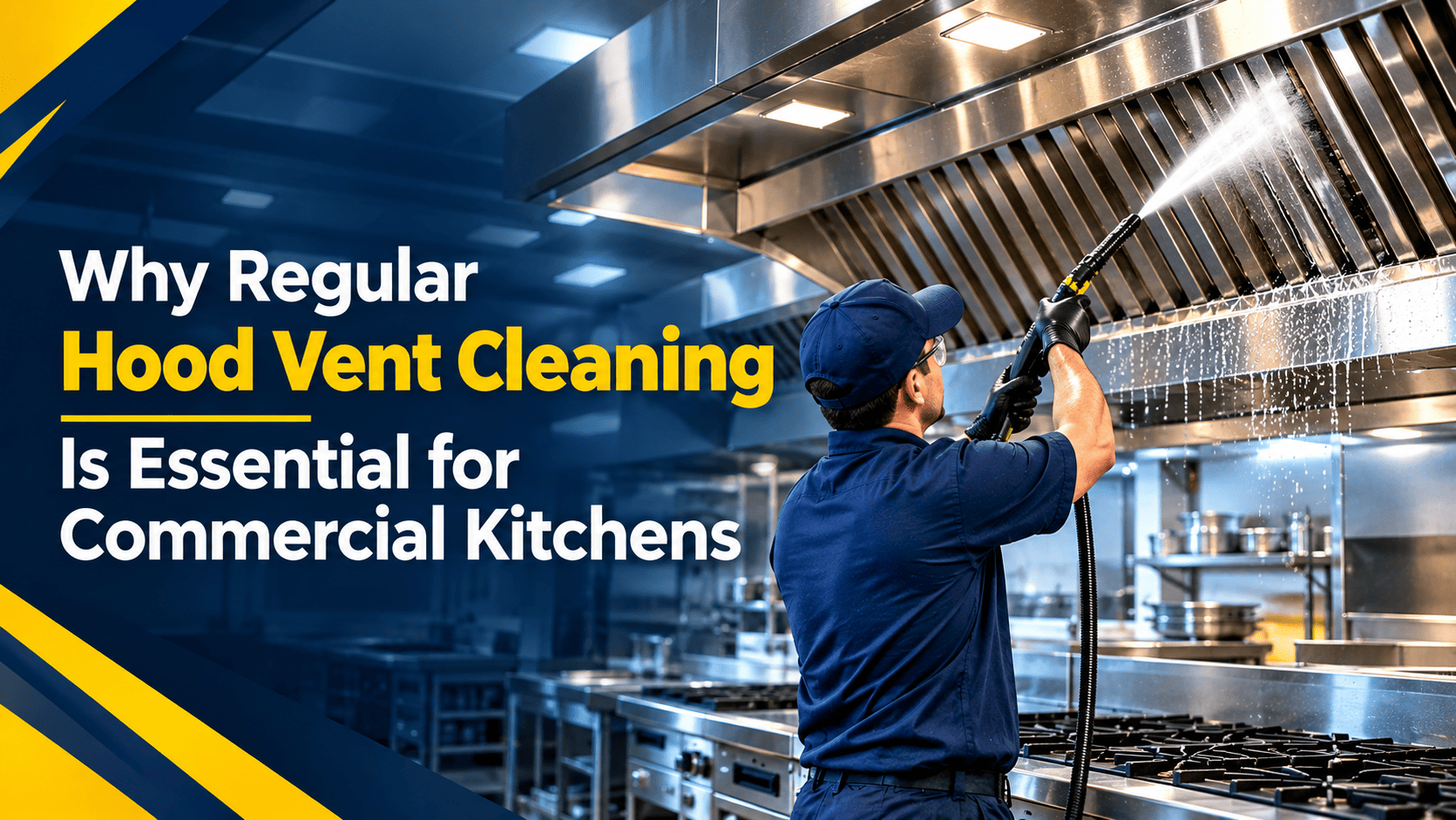
A commercial kitchen is a busy environment where cooking takes place for hours every day, creating heat, smoke, grease, and airborne particles that can quickly accumulate inside the ventilation system. While restaurant owners and kitchen managers usually focus on food quality, customer service, and daily operations, the condition of the kitchen exhaust system also deserves regular attention. Routine Hood Vent Cleaning helps remove grease and buildup from the hood, filters, ducts, and other ventilation components, allowing the system to operate more effectively while supporting a cleaner and safer commercial kitchen environment.
What Is Hood Vent Cleaning?
Hood vent cleaning is the process of removing grease, oil, smoke residue, and other contaminants that accumulate inside a commercial kitchen ventilation system. During normal cooking, grease-laden vapors rise from grills, fryers, ranges, ovens, and other equipment before entering the exhaust hood and ductwork.
Over time, this residue can become thick and difficult to remove if the system is not professionally maintained. Regular cleaning helps prevent excessive buildup and keeps the ventilation system functioning properly.
For busy restaurants and food-service businesses, professional cleaning is especially important because their exhaust systems may operate for many hours every day. A consistent maintenance schedule can help address buildup before it becomes a larger operational or safety concern.
Why Regular Cleaning Matters for Commercial Kitchens
Commercial kitchens produce considerably more grease and airborne contaminants than most residential kitchens. When these materials are allowed to accumulate, they can affect ventilation performance and create additional maintenance concerns.
Regular Commercial Hood Vent Cleaning helps keep the exhaust system cleaner and allows kitchen ventilation equipment to work more efficiently. A clean system can also contribute to a more comfortable workspace by helping remove cooking smoke, heat, and odors from the kitchen.
For restaurant owners, scheduling routine cleaning is not simply another maintenance task. It is an important part of maintaining the overall condition of the kitchen and supporting day-to-day operations.
1. Helps Reduce Grease Buildup
Grease is one of the biggest challenges in a commercial kitchen ventilation system. Cooking activities continuously release grease particles into the air, and some of these particles eventually settle on hood surfaces, filters, ducts, and other components.
If grease continues to accumulate, it can become difficult to remove through basic surface cleaning. Professional cleaning addresses areas that may not be accessible during everyday kitchen maintenance.
With routine Restaurant Hood Vent Cleaning, businesses can keep grease accumulation under control and maintain a cleaner exhaust system. This is particularly important for restaurants that operate high-volume cooking equipment throughout the day.
2. Supports a Safer Kitchen Environment
A commercial kitchen contains multiple heat-producing appliances, including fryers, grills, ranges, and ovens. Because grease is combustible, allowing heavy grease deposits to remain inside an exhaust system can create an unnecessary safety concern.
Regular Kitchen Hood Vent Cleaning helps remove accumulated grease from important parts of the ventilation system. Although cleaning cannot eliminate every potential kitchen hazard, maintaining the exhaust system is an important component of responsible commercial kitchen maintenance.
Restaurant owners and managers should view hood cleaning as part of their broader approach to maintaining a safe working environment for employees and customers.
3. Improves Ventilation Performance
A properly maintained exhaust system needs to move smoke, heat, grease-laden vapors, and cooking odors away from the kitchen efficiently. Heavy buildup inside the hood or ductwork can interfere with normal airflow and place additional demands on the ventilation system.
Professional cleaning can help keep the system free from excessive deposits, supporting better airflow and ventilation performance.
Commercial Kitchen Hood Cleaning is particularly valuable for high-volume kitchens where ventilation systems are constantly exposed to grease and smoke. Regular maintenance can help businesses identify buildup early instead of waiting until ventilation problems become noticeable.
4. Helps Control Cooking Odors
Cooking odors are a normal part of operating a restaurant, but strong or persistent odors can become unpleasant when the exhaust system is not properly maintained.
Grease and residue that collect inside the ventilation system can contribute to lingering odors. Keeping the hood, filters, and ductwork clean can help the system remove cooking byproducts more effectively.
For restaurants located in busy commercial areas or buildings with neighboring businesses, maintaining a clean ventilation system can be especially helpful in managing unwanted cooking odors.
5. Supports Better Kitchen Air Quality
Employees can spend many hours working in a commercial kitchen, so maintaining a well-functioning ventilation system is an important part of creating a comfortable workplace.
A clean exhaust system can help remove smoke, heat, grease-laden vapors, and cooking odors from the kitchen. While many factors influence indoor air quality, proper ventilation maintenance is an important part of keeping the kitchen environment cleaner and more comfortable.
Regular Restaurant Exhaust Hood Cleaning can therefore be incorporated into a broader kitchen maintenance routine that includes cleaning cooking equipment, floors, walls, filters, and other surfaces.
6. Helps Protect Ventilation Equipment
Commercial kitchen ventilation systems represent a significant investment for many food-service businesses. The hood, fans, filters, ductwork, and related components need regular maintenance to remain in good working condition.
Heavy grease deposits can make cleaning more difficult and may contribute to additional wear or maintenance requirements over time. Routine cleaning helps remove accumulated residue before it becomes excessive.
Instead of treating hood cleaning as an occasional task, restaurant owners can establish a consistent maintenance schedule based on their cooking volume and type of operation.
7. Professional Cleaning Reaches Hard-to-Access Areas
Daily kitchen cleaning generally focuses on visible surfaces, but grease can travel much deeper into an exhaust system. Filters and hood surfaces may be accessible to kitchen staff, while ductwork and other internal areas can be considerably more difficult to clean properly.
This is where Professional Hood Vent Cleaning Services can provide an important advantage. Trained cleaning professionals can inspect and clean areas of the ventilation system that may not receive attention during routine kitchen cleaning.
Professional service can also help businesses identify areas that may require additional maintenance or attention.
How Often Should a Commercial Hood Be Cleaned?
The appropriate cleaning frequency depends on several factors, including the type of food being prepared, the amount of cooking performed, the equipment used, and how frequently the kitchen operates.
A restaurant that regularly uses fryers, grills, or other grease-producing equipment may require more frequent cleaning than a low-volume commercial kitchen. Businesses should follow applicable fire-safety requirements and manufacturer recommendations while developing their maintenance schedules.
Rather than waiting until grease buildup becomes obvious, it is better to establish a regular cleaning routine and keep records of completed services.
What Happens During Professional Hood Cleaning?
A professional cleaning service typically begins by assessing the ventilation system and identifying areas where grease and residue have accumulated. Depending on the system, cleaning may include the hood, filters, accessible ductwork, fans, and other components.
The goal is to remove accumulated grease and contaminants while leaving the ventilation system in a cleaner condition. Experienced professionals also take appropriate precautions to protect surrounding kitchen equipment and surfaces during the cleaning process.
Because every commercial kitchen is different, the cleaning approach and frequency should be based on the specific ventilation system and cooking operation.
Choosing the Right Hood Cleaning Company
When selecting a hood cleaning provider, commercial kitchen owners should look for a company with experience working with restaurant and commercial ventilation systems. A professional provider should understand the importance of thorough cleaning rather than simply wiping visible surfaces.
It is also helpful to choose a company that communicates clearly about the cleaning process, recommended service frequency, and maintenance considerations.
For businesses looking for dependable Hood Vent Cleaning, Corner Stone Commercial Services provides commercial cleaning solutions designed to help businesses maintain cleaner and better-maintained kitchen ventilation systems.
Make Hood Cleaning Part of Your Kitchen Maintenance Routine
Regular hood cleaning should not be treated as an afterthought. Grease, smoke, and cooking residue are unavoidable parts of commercial food preparation, but allowing them to accumulate inside the ventilation system can create unnecessary maintenance and safety concerns.
By scheduling regular Commercial Hood Vent Cleaning, restaurant owners can help control grease buildup, support ventilation performance, manage cooking odors, and maintain a cleaner kitchen environment.
Whether you operate a small restaurant, a busy commercial kitchen, a catering facility, or another food-service operation, maintaining the exhaust system is an important part of responsible facility maintenance. A consistent cleaning schedule can help protect your investment and keep your kitchen operating in a cleaner, more organized condition.
If your commercial kitchen ventilation system has not been professionally cleaned recently, now may be a good time to review your maintenance schedule and arrange a professional inspection and cleaning service.

Comments are closed