



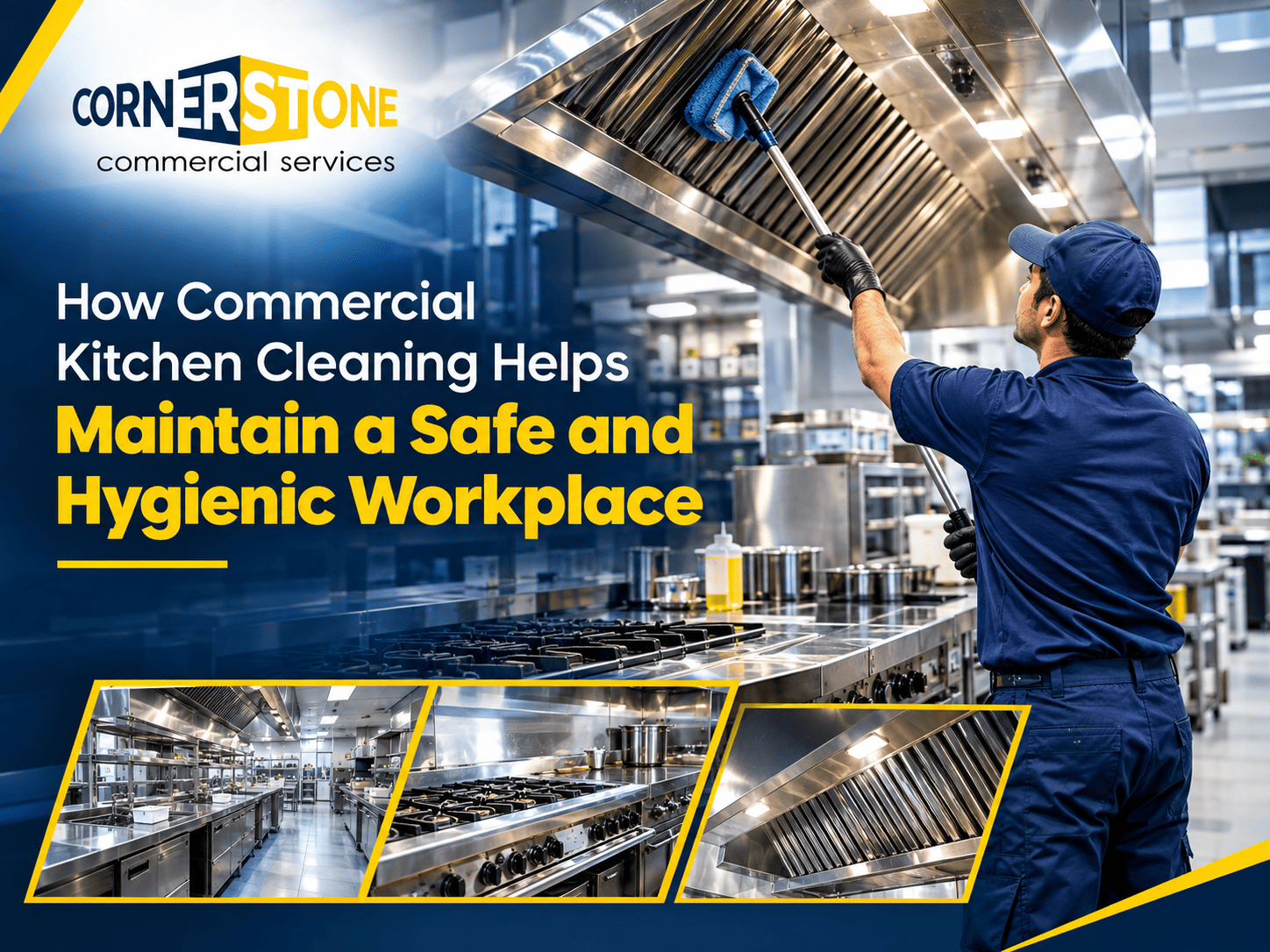
A commercial kitchen is one of the busiest areas in any restaurant or food service business, where employees work around hot cooking equipment, raw ingredients, grease, food particles, and moisture throughout the day. Because so many activities happen in a limited space, maintaining a clean and hygienic environment is essential for protecting employees, supporting food safety, and creating a workplace where daily operations can continue smoothly.
Regular Commercial Kitchen Cleaning is not simply about making floors, counters, and equipment look presentable. A properly maintained kitchen helps reduce contamination risks, control grease and bacteria, prevent unpleasant odors, and keep frequently used surfaces in better condition. For restaurants and food service facilities, establishing a consistent cleaning routine can make a significant difference in both workplace hygiene and overall operational efficiency.
Why Kitchen Cleanliness Matters in a Commercial Environment
Unlike residential kitchens, commercial kitchens can operate for many hours each day and may prepare hundreds of meals within a short period. Employees constantly move between preparation stations, cooking areas, storage spaces, dishwashing sections, and serving areas, which means dirt, food residue, grease, and moisture can quickly accumulate if cleaning is delayed.
A professional approach to Commercial Kitchen Cleaning Services focuses on more than visible dirt. It addresses areas that may be overlooked during routine cleaning, including corners, underneath equipment, behind appliances, walls, floors, food preparation surfaces, and other high-contact areas. Keeping these spaces clean helps create a more sanitary environment for employees who spend long hours working in the kitchen.
Reducing the Risk of Cross-Contamination
One of the most important reasons to maintain a clean commercial kitchen is to reduce the possibility of cross-contamination. Raw meat, seafood, vegetables, prepared foods, and other ingredients may pass through the same kitchen during a busy shift, making proper cleaning and sanitation especially important.
Food particles and residue left on preparation surfaces can potentially transfer between ingredients when those areas are not cleaned properly. Employees also regularly touch handles, counters, equipment controls, storage areas, and other surfaces, which makes routine cleaning an important part of maintaining workplace hygiene.
A structured cleaning process helps employees begin their work in a cleaner environment and supports safer food preparation practices throughout the day.
The Importance of Professional Kitchen Cleaning
Daily staff cleaning is necessary, but it may not always be enough to address the buildup that develops over time. Grease can collect around cooking equipment, food residue can become difficult to remove, and dirt can accumulate in areas that are not part of the normal daily cleaning routine.
Professional Kitchen Cleaning provides a more detailed approach by focusing on areas that require additional attention. Experienced cleaning professionals can work around commercial equipment and identify areas where grease, grime, food particles, and other residues commonly accumulate.
A thorough cleaning routine can also help businesses maintain a more consistent standard of cleanliness instead of relying entirely on employees to handle every cleaning task after a busy shift.
How Commercial Kitchen Deep Cleaning Supports Hygiene
While routine cleaning keeps a kitchen manageable from day to day, Commercial Kitchen Deep Cleaning is important for addressing accumulated dirt and grease that regular cleaning may not completely remove.
Deep cleaning can involve detailed attention to floors, walls, preparation surfaces, equipment exteriors, hard-to-reach areas, and other parts of the kitchen that receive less attention during normal operations. Depending on the facility and its needs, cleaning may also focus on areas behind and underneath equipment where food particles and grease can gradually accumulate.
Scheduling deep cleaning regularly can help maintain a cleaner workplace and complement the everyday cleaning performed by kitchen employees.
Keeping Restaurant Kitchens Cleaner
A busy restaurant kitchen needs a cleaning strategy that fits the pace of its operations. Employees need to be able to prepare food efficiently without working around unnecessary clutter, grease, or accumulated residue.
Restaurant Kitchen Cleaning helps restaurants maintain a professional environment by addressing the areas where food preparation and cooking take place. Clean floors can help reduce slippery conditions caused by grease or food spills, while clean work surfaces provide employees with a more hygienic area for preparing ingredients.
Kitchen cleanliness can also influence the overall impression of a restaurant. Although customers may not see the entire kitchen, maintaining high cleaning standards demonstrates that the business takes hygiene, food preparation, and workplace conditions seriously.
Cleaning Helps Protect Kitchen Equipment
Commercial cooking equipment represents a major investment for many restaurants and food service businesses. Ovens, grills, fryers, refrigerators, preparation tables, and other equipment are used repeatedly throughout the day and can collect grease, food residue, dust, and other buildup.
Regular cleaning helps prevent excessive accumulation around equipment and can make routine maintenance easier. When surfaces are consistently cleaned, employees and maintenance professionals may also have an easier time identifying signs of wear, damage, or other issues that require attention.
Although cleaning alone cannot eliminate equipment maintenance requirements, keeping equipment and surrounding areas clean can support a more organized and manageable kitchen environment.
Supporting a Safer Workplace for Employees
A hygienic workplace is also an important part of employee safety. Commercial kitchens can contain wet floors, grease, food debris, sharp tools, hot surfaces, and heavy equipment, creating several potential workplace hazards when housekeeping standards are neglected.
Consistent cleaning can help control some of these conditions by removing spills, grease, and food debris before they become larger problems. Keeping walkways and working areas cleaner can also help employees move through the kitchen more comfortably during busy service periods.
For this reason, Kitchen Cleaning Services should be viewed as part of an overall workplace maintenance strategy rather than simply an appearance-related service.
The Role of Commercial Restaurant Cleaning
Restaurants have several areas that require regular attention, including dining spaces, restrooms, storage areas, food preparation stations, and kitchens. While customer-facing areas often receive immediate attention, the kitchen requires the same level of care because it is where food is stored, prepared, cooked, and handled.
Commercial Restaurant Cleaning can help businesses maintain consistent cleanliness throughout their facilities while giving additional attention to high-use areas. A clean kitchen can contribute to better organization, smoother daily routines, and a more comfortable working environment for restaurant employees.
When cleaning responsibilities are clearly planned, employees can focus more effectively on their primary responsibilities while professional cleaners handle detailed cleaning tasks that require additional time and expertise.
Why Consistent Cleaning Is Better Than Occasional Cleaning
Waiting until a commercial kitchen becomes heavily soiled can make cleaning more difficult and time-consuming. Grease and food residue can become increasingly difficult to remove when they are allowed to accumulate over long periods.
A consistent cleaning schedule makes it easier to control buildup before it becomes excessive. Daily cleaning can address immediate spills and food debris, while scheduled professional cleaning can take care of areas that need more detailed attention.
This combination creates a practical approach to kitchen maintenance because it recognizes that cleanliness requires ongoing attention rather than a single cleaning session.
Choosing the Right Commercial Kitchen Cleaning Approach
Every commercial kitchen has different cleaning requirements based on its size, menu, equipment, operating hours, and volume of food preparation. A small café may have different needs than a large restaurant, catering facility, institutional kitchen, or food production space.
When selecting a cleaning service, businesses should consider whether the provider understands commercial kitchen environments and can develop a cleaning approach based on the facility’s specific requirements. Experience, consistency, attention to detail, and the ability to work around normal business operations are all important factors to consider.
A reliable cleaning routine should address both visible areas and less obvious spaces where grease, dirt, moisture, and food particles can accumulate.
Creating a Cleaner and More Productive Kitchen Environment
Cleanliness and productivity often go together in a commercial kitchen. When equipment, preparation areas, floors, and workspaces are properly maintained, employees can work in a more organized environment without unnecessary buildup interfering with their routines.
A well-maintained kitchen can also make cleaning tasks easier for employees because professional deep cleaning reduces the amount of accumulated grime they need to handle during everyday operations.
For restaurant owners and managers, investing in consistent cleaning is therefore not only about appearance. It is about maintaining a workplace that supports hygiene, organization, employee safety, and efficient food preparation.
Maintain a Higher Standard of Kitchen Hygiene
Maintaining a clean commercial kitchen requires consistency, attention to detail, and a cleaning plan that addresses both everyday messes and deeper buildup. From food preparation surfaces and floors to equipment and hard-to-reach areas, every part of the kitchen can contribute to overall workplace hygiene.
Professional cleaning can complement daily employee responsibilities by providing the detailed attention that busy restaurant teams may not always have time to provide. With a reliable cleaning schedule, businesses can create a cleaner and more comfortable environment while supporting better workplace practices.
Corner Stone Commercial Services provides professional cleaning solutions designed to help commercial facilities maintain cleaner, healthier, and more manageable environments. For businesses that need dependable Commercial Kitchen Cleaning, establishing a regular professional cleaning routine can be an important step toward maintaining a safe and hygienic workplace.

Comments are closed