




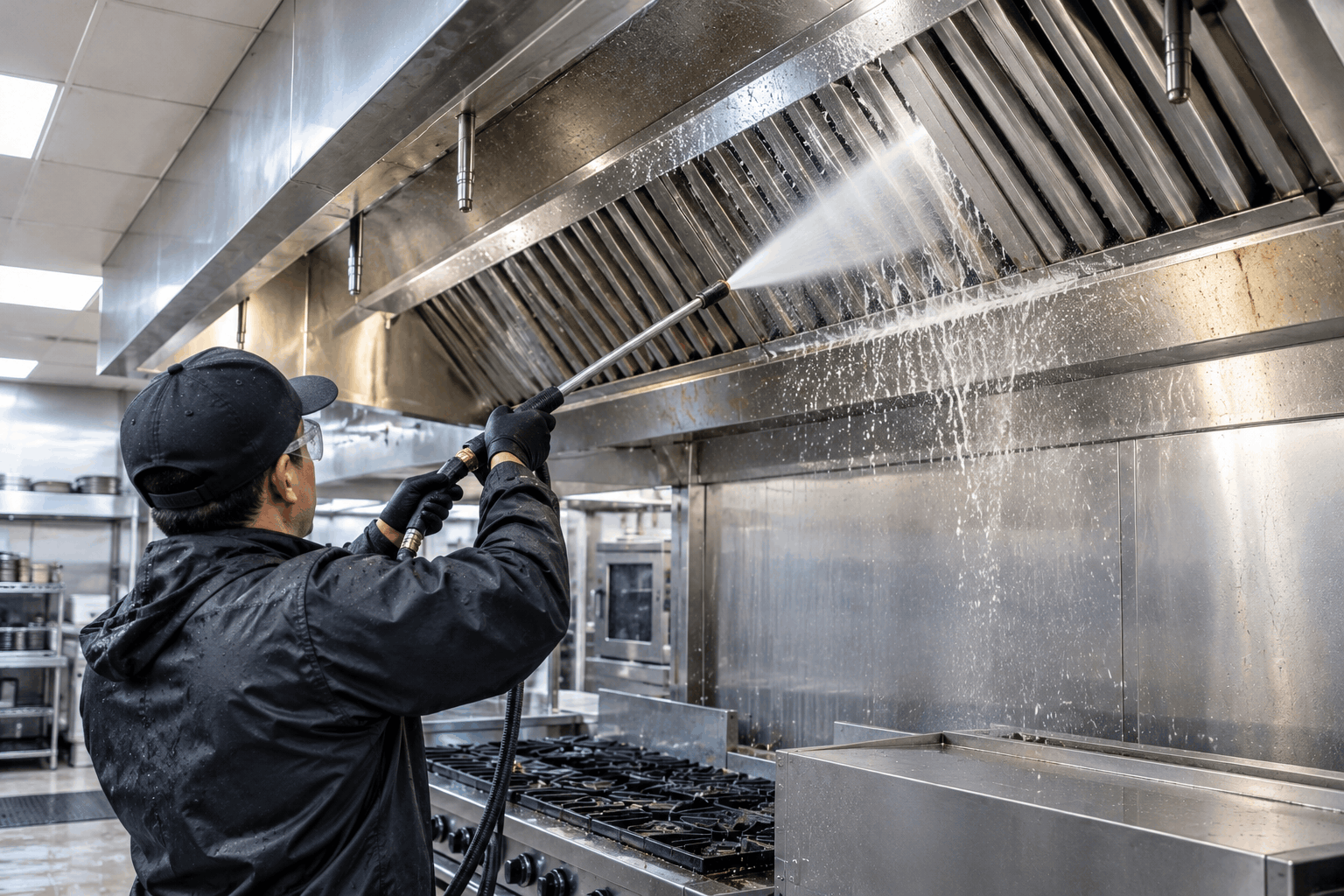
NFPA 96 requires commercial kitchen exhaust systems to be inspected for grease buildup at intervals ranging from monthly to annually, depending on the type and volume of cooking. For businesses arranging commercial kitchen hood cleaning, the applicable frequency depends on the cooking operation and the amount of grease-laden vapor it produces.
Solid-fuel cooking requires monthly inspection, high-volume cooking requires quarterly inspection, moderate-volume cooking requires semiannual inspection, and low-volume cooking requires annual inspection. When an inspection identifies grease accumulation that requires removal, the affected exhaust components should be cleaned.
How Often Does NFPA 96 Require Hood Cleaning?
NFPA 96 establishes four inspection frequencies for commercial kitchen exhaust systems: monthly, quarterly, semiannually, and annually. The applicable frequency depends on the cooking operation and affects the maintenance schedule for commercial hood vent cleaning.
| Cooking Operation | Inspection Frequency |
| Solid-fuel cooking | Monthly |
| High-volume cooking | Quarterly |
| Moderate-volume cooking | Semiannually |
| Low-volume cooking | Annually |
High-volume operations can include 24-hour cooking, charbroiling, and wok cooking. Low-volume operations can include facilities such as churches, day camps, seasonal businesses, and senior centers.
These intervals refer to inspections for grease accumulation. When the inspection determines that cleaning is necessary, the exhaust system must be cleaned accordingly. This can include the hood, grease removal devices, ductwork, exhaust fans, and other connected components.
What Determines How Often a Restaurant Hood Needs Cleaning?
Cooking volume, cooking methods, operating hours, and grease production determine how often a commercial kitchen exhaust system needs attention. Kitchens using equipment such as charbroilers, fryers, or woks can produce significant grease-laden vapor, while longer operating hours can increase the amount of residue entering the exhaust system.
For restaurants using commercial hood vents in Houston, the condition of the entire exhaust system also matters. Grease can accumulate beyond the visible hood, including inside ductwork and around exhaust fans.
For this reason, restaurant operators should not assume that every kitchen requires the same cleaning schedule. A high-volume kitchen may need substantially more frequent service than a lower-volume operation.
What Happens If a Commercial Kitchen Does Not Follow NFPA 96 Cleaning Requirements?
Failing to maintain a commercial kitchen exhaust system can allow excessive grease accumulation and create fire-safety and inspection concerns. Grease deposits inside exhaust components can become a combustible hazard when they are not properly controlled.
Houston Fire Department requirements state that commercial kitchen vent hoods, exhaust ducts, exhaust fans, and related components must be cleaned and inspected by approved personnel as often as necessary to prevent excessive grease accumulation. This makes proper commercial hood vent cleaning in Houston an important part of maintaining a commercial kitchen exhaust system.
For Houston restaurant owners, waiting until visible grease becomes heavy is not a reliable maintenance strategy. The cooking operation, applicable inspection interval, and condition of the exhaust system should all be considered.
Does NFPA 96 Require Cleaning Records?
Yes, NFPA 96 requires documentation following inspection or cleaning of a commercial kitchen exhaust system. The required certificate identifies the servicing company, the person who performed the work, and the date of inspection or cleaning.
NFPA 96 also requires a service label on the hood and a written report following inspection or cleaning. The report can identify areas that were inaccessible or not cleaned, duct access-panel locations, and visible ductwork or access-panel leaks.
For businesses arranging Houston Commercial Kitchen Hood Cleaning, maintaining these records provides documentation of when the system was inspected or serviced and what work was performed.
What Should Restaurant Owners Keep Ready for a Hood Inspection?
Restaurant owners should keep current hood cleaning certificates, service records, written reports, and related fire-safety documentation available for inspection. A basic maintenance file should include:
- Most recent inspection or cleaning certificate
- Service date and servicing company
- Name of the person who performed the work
- Written inspection or cleaning report
- Notes about inaccessible or uncleaned areas
- Previous service records
- Applicable fire-suppression system documentation
Keeping these records organized makes it easier to show that required exhaust-system maintenance has been completed. Businesses scheduling commercial hood vent cleaning should retain the documentation provided after the service.
Hood exhaust cleaning should also be distinguished from fire-suppression system servicing. Houston requirements separately address inspection and servicing of commercial kitchen fire-suppression systems.
What Are the NFPA 96 Hood Cleaning Requirements in Houston, TX?
NFPA 96 establishes inspection and cleaning requirements for commercial kitchen exhaust systems, while Houston requirements also address commercial kitchen vent hoods, exhaust ducts, exhaust fans, and related components. Houston Fire Department guidance requires these components to be cleaned and inspected as often as necessary to prevent excessive grease accumulation.
For businesses needing commercial hood vents in Houston, the applicable frequency depends on the cooking operation and its grease production. NFPA 96 inspection intervals range from monthly for solid-fuel cooking to annually for low-volume operations.
Restaurant owners should also account for requirements from the local authority having jurisdiction because local requirements can apply alongside NFPA standards.
How Can Cornerstone Commercial Services Help With Commercial Hood Vent Cleaning?
At Cornerstone Commercial Services, we provide commercial hood vent cleaning in Houston to remove grease, residue, and buildup from commercial kitchen hood and exhaust systems. We clean the ventilation areas that collect cooking residue during regular food-service operations.
For businesses looking for Houston Commercial Kitchen Hood Vent Cleaning, our service addresses commercial kitchen hood and ventilation components as part of routine kitchen maintenance. We also provide related commercial cleaning services for food-service facilities.
Contact us today to schedule commercial kitchen hood cleaning or request an estimate for your Houston commercial kitchen.

Comments are closed