


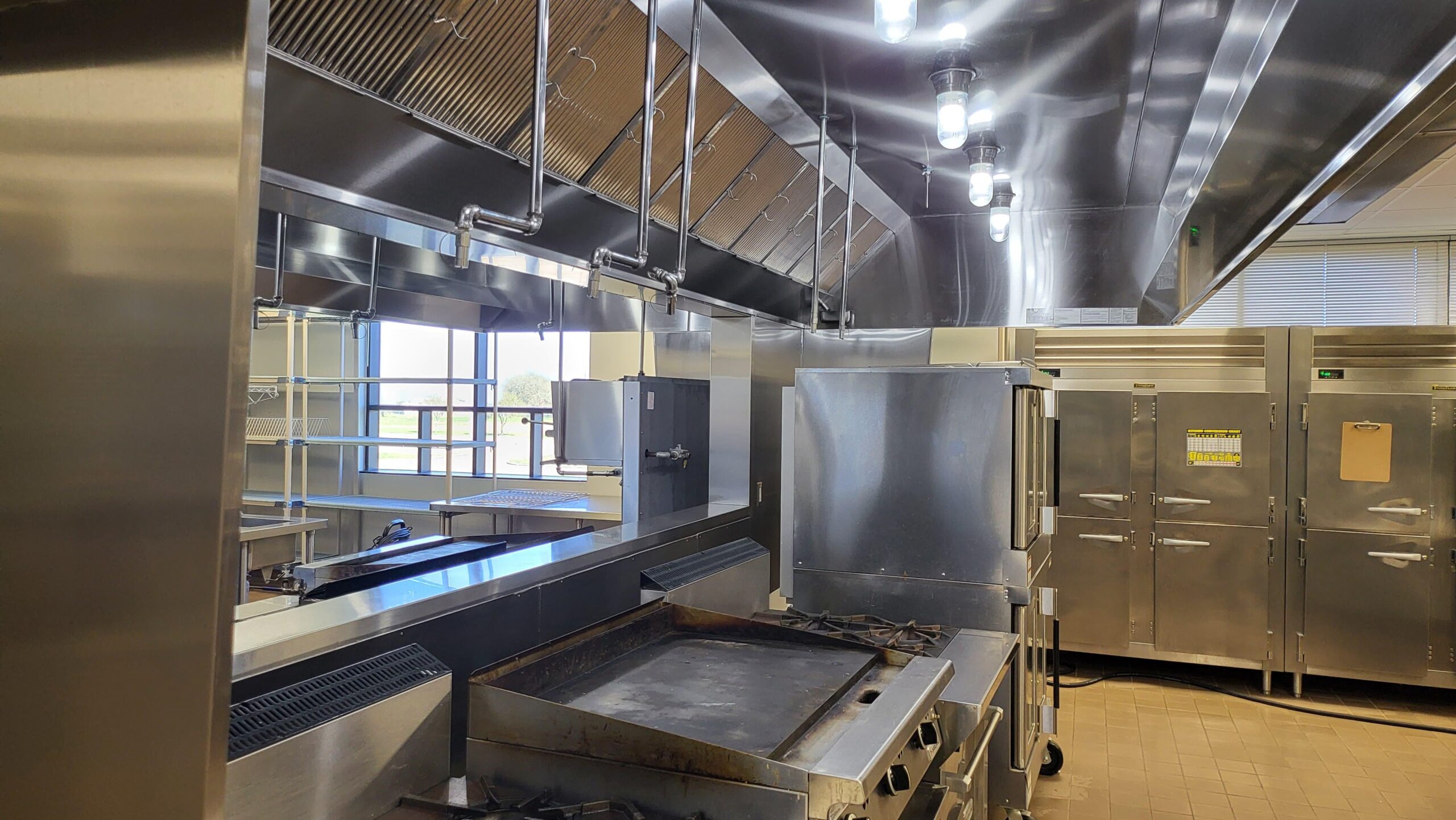
Commercial kitchens are busy, hot, and messy places. Grease-laden vapors build up in hoods and ducts, and that build-up is a leading cause of kitchen fires. NFPA 96 is the national standard that sets inspection and cleaning expectations for commercial exhaust systems so you can reduce fire risk, pass inspections, and protect staff and property.
Below is a straightforward, action-oriented explanation of what NFPA 96 says about cleaning frequency, how to interpret the requirements, and practical steps building managers and kitchen operators in College Station should take.
What does NFPA 96 require in plain terms?
NFPA 96 does not provide a single time interval for all kitchens. Rather, the standard only correlates inspection and frequency of cleaning with the use of the kitchen and the types of cooking activities done.
Summarising, solid-fuel cooked systems or heavy charbroiling or wok cooking require significantly more maintenance than the low-volume kitchens like churches or summer cafeterias. The standard aims at having the whole exhaust system checked after cooking volumes, and the cleaning of the system where grease deposits are detected before surfaces become very much contaminated.
The typical cleaning frequency categories
- Monthly on solid fuel cooking, like wood or charcoal-fired cooking.
- Quarterly, when the operation is of high volume or heavy grease, like 24-hour cooking, charbroiling, or wok cooking.
- Semiannually, on medium-volume cooking activities, such as most full-service restaurants.
- Annual, where the volume is low, like day camps, churches, or seasonal locations.
Inspection and cleaning must be evidence-based
NFPA 96 focuses on inspection initially and as-you-go cleaning. Grease levels should be recorded by a trained inspector or some other qualified service inspecting hoods, grease removal devices, fans, and ducts.
In case the inspection reveals deposits exceeding the required limits, the entire exhaust system should be made bare before things deteriorate. Practically, this translates to booking an initial inspection after which the findings can be used to establish the next cleaning interval instead of making assumptions.
Who can perform the inspection and cleanings?
In the standard, it stipulates that inspections and cleanings should be done by well-trained and qualified individuals who are acceptable to the authority in question. That entails established industry standards that are adhered to by companies and recorded training, insurance, and references.
The jurisdiction authorities, like local fire marshals, are allowed to have other local rules that you are required to comply with, and therefore, always confirm with those in authority before using a vendor schedule.
Practical steps to determine the right schedule for your kitchen
- Start with a full baseline inspection and photographic documentation of the hood, duct, fan, and grease removal devices
- Classify your operation using NFPA categories and note specific high-risk equipment such as charbroilers and woks
- Set an initial cleaning schedule based on the category, then reassess after the first two cleanings to fine-tune intervals
- Maintain cleaning certificates, inspection reports, and a sticker on the hood noting the next inspection or cleaning date as required by the code.
- Coordinate with your fire inspector to confirm that the authority having jurisdiction accepts your program and record-keeping.
Record keeping and proof of compliance
The NFPA 96 recommends that records be maintained on site, indicating the persons who did the inspections and cleanings, as well as the date and the areas that were maintained. Numerous jurisdictions insist on the availability of a certificate or a report during fire or health inspection, and a labeled sticker on the hood with the date of the next inspection or cleaning. Store digital copies and backups in a maintenance binder in order to be able to generate them as soon as possible.
What happens if you ignore the code?
Noncompliance with NFPA 96 puts you at risk of fire, exposes you to fines, compelled shutdowns, or denied insurance benefits in the event of a loss. The insurance companies and the local fire authorities require the maintenance to be documented and will seek inspection and cleaning records following any fire in the kitchen. Active compliance minimizes liability and downtime.
How Commercial Cleaning Services and related trades fit in?
The trained crews, equipment, and documentation of the NFPA 96 are supplied by the commercial kitchen cleaning companies. Whenever you employ services like Commercial Kitchen Cleaning College Station, ensure that they outline the scope of work in writing, pre- and post-picture, and a certificate of work.
Also, think of scheduling regular Commercial Power Washing College Station of exterior greasy and dirty surfaces that may damage approach areas and exteriors of buildings. Halfway cleaning of the facilities and usual hood cleaning helps decrease overall risk and makes inspections seamless.
Final checklist before you schedule a cleaning
Check the category of operation with a certified inspector. Ask to write a report about the inspection and cleaning. Ensure that the provider cleaning is to bare metal where necessary, and grease is removed from fans and ducts. Make sure that the next inspection sticker will be stuck on your hood, and an electronic copy of the report will be given to you to keep. Check with your local fire marshal in case you do not know what category your kitchen is in.
Conclusion
NFPA 96 does not work in a punitive manner. It has a cleaning frequency regime to ensure that the risk is matched to its effort to ensure that kitchens are safe and operational. The easiest way to be in compliance is the regular checks, evidence-based intervals, trained cleaners, and detailed records.
To approach the learners practically to accomplish inspection-ready service, routine documentation, and professional cleaning that satisfies the standard, contact a local expert who knows Commercial Cleaning College Station’s needs. Cornerstone Commercial Services is able to evaluate your system, clean it in a compliant manner, and give you the documentation to meet the inspectors and safeguard your business.

Comments are closed